Most people have goals.
“I want to grow my business.”
“I want to save more money.”
“I want to get healthier.”
“I want to grow my TikTok account.”
There is nothing wrong with having goals. In fact, every meaningful accomplishment begins with one. The challenge is that many goals are too broad to provide direction. They describe what we want but not how we plan to achieve it.
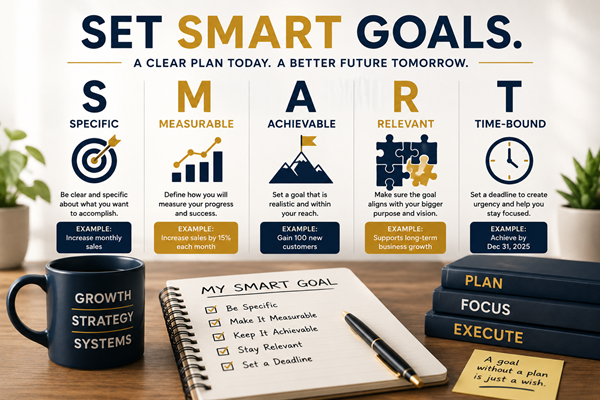
One of the most practical ways to improve your planning is by using the SMART goal framework.
SMART is an acronym that helps transform general ideas into clear, actionable objectives.
S — Specific
A good goal should clearly define what you want to accomplish.
Instead of saying:
“I want my business to grow.”
Consider something more specific:
“I want to increase monthly sales by attracting more repeat customers.”
The more specific your goal, the easier it becomes to create a plan.
M — Measurable
If you can’t measure your progress, it’s difficult to know whether you’re moving in the right direction.
Ask yourself:
- How will I know I’ve achieved this goal?
- What number or result am I trying to reach?
For example:
- Increase monthly revenue by 15%.
- Publish one blog article each week.
- Save $500 each month.
Measurement provides clarity and accountability.
A — Achievable
Goals should stretch your abilities, but they should also remain realistic.
Setting goals that are impossible to achieve often leads to frustration instead of motivation.
An achievable goal challenges you while remaining within reach through consistent effort and good planning.
R — Relevant
Every goal should support a larger purpose.
Before committing to a goal, ask yourself:
“Does this move me closer to where I ultimately want to be?”
When your daily actions align with your long-term vision, your time and energy are invested more intentionally.
T — Time-Bound
Every goal needs a deadline.
Without a timeframe, it becomes easy to postpone action indefinitely.
Instead of saying:
“I want to improve my finances.”
Try:
“I want to build a six-month emergency fund by the end of next year.”
Deadlines create urgency and help prioritize your efforts.
A Goal Is Only the Beginning
Setting SMART goals is an important first step, but goals alone don’t create results.
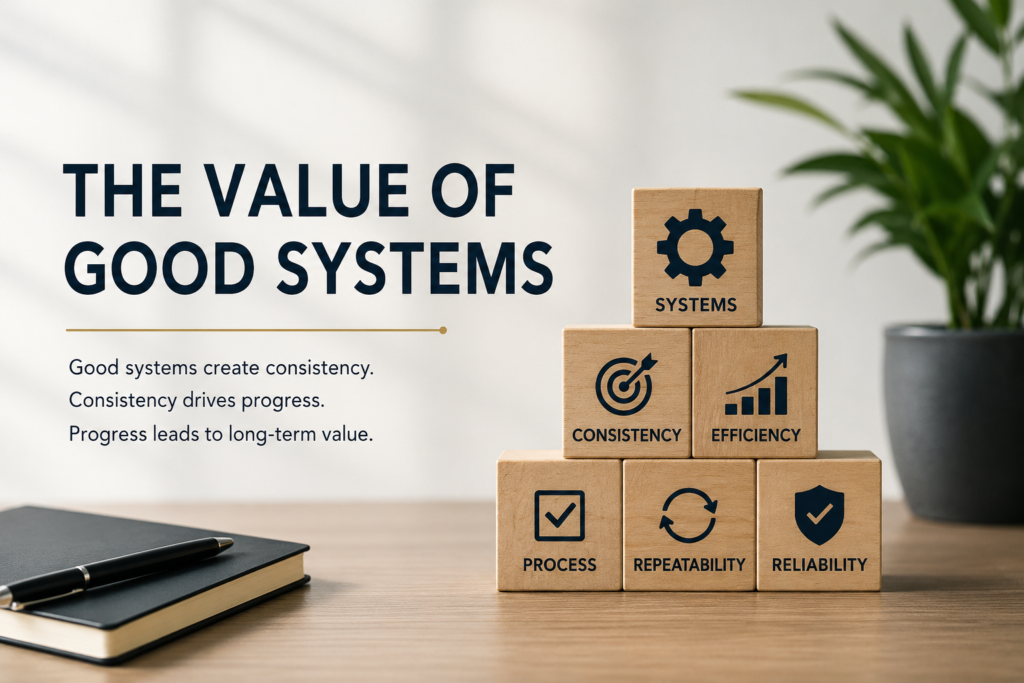
Once a goal has been defined, it needs a strategy that outlines how it will be achieved. That strategy must then be supported by systems and consistent execution.
A well-written goal provides direction.
A thoughtful strategy provides the roadmap.
Good systems help you stay on course.
Together, they make meaningful progress more likely.
As you plan for the future, consider reviewing your current goals through the SMART framework. A few small adjustments today can provide greater clarity, better focus, and a stronger foundation for long-term growth tomorrow.